If you sell online, you never meet your customer. There's no shop floor, no window display, no assistant to hand them the product with a smile. There is one physical moment, and it happens on a doorstep: the parcel arrives.
That parcel is your shop floor, delivered. It's the only thing about your brand the customer can actually hold, and it's worth treating as the event it is rather than an afterthought stuffed with tape.
The doorstep is your shop floor
A physical shop gets to control everything — the light, the layout, the way a product is handed over. Online, you hand all of that to a courier and hope for the best. The box is the one piece of that experience you still own outright.
So it carries a lot. It's first impression, brand ambassador and product protector in one, and it turns up when the customer is at their most receptive: the thing they ordered has arrived, and they want to open it.
Think in a sequence, not a single moment
The mistake is to treat unboxing as one event. It isn't — it's a short sequence of beats, and each one is a chance to get something right.
- The outside. What they see on the doorstep. Clean, branded, clearly yours — not a bare brown box with a label slapped on.
- The opening. How it gives way. A satisfying pull, a tidy seal, a box that doesn't need a knife and a fight.
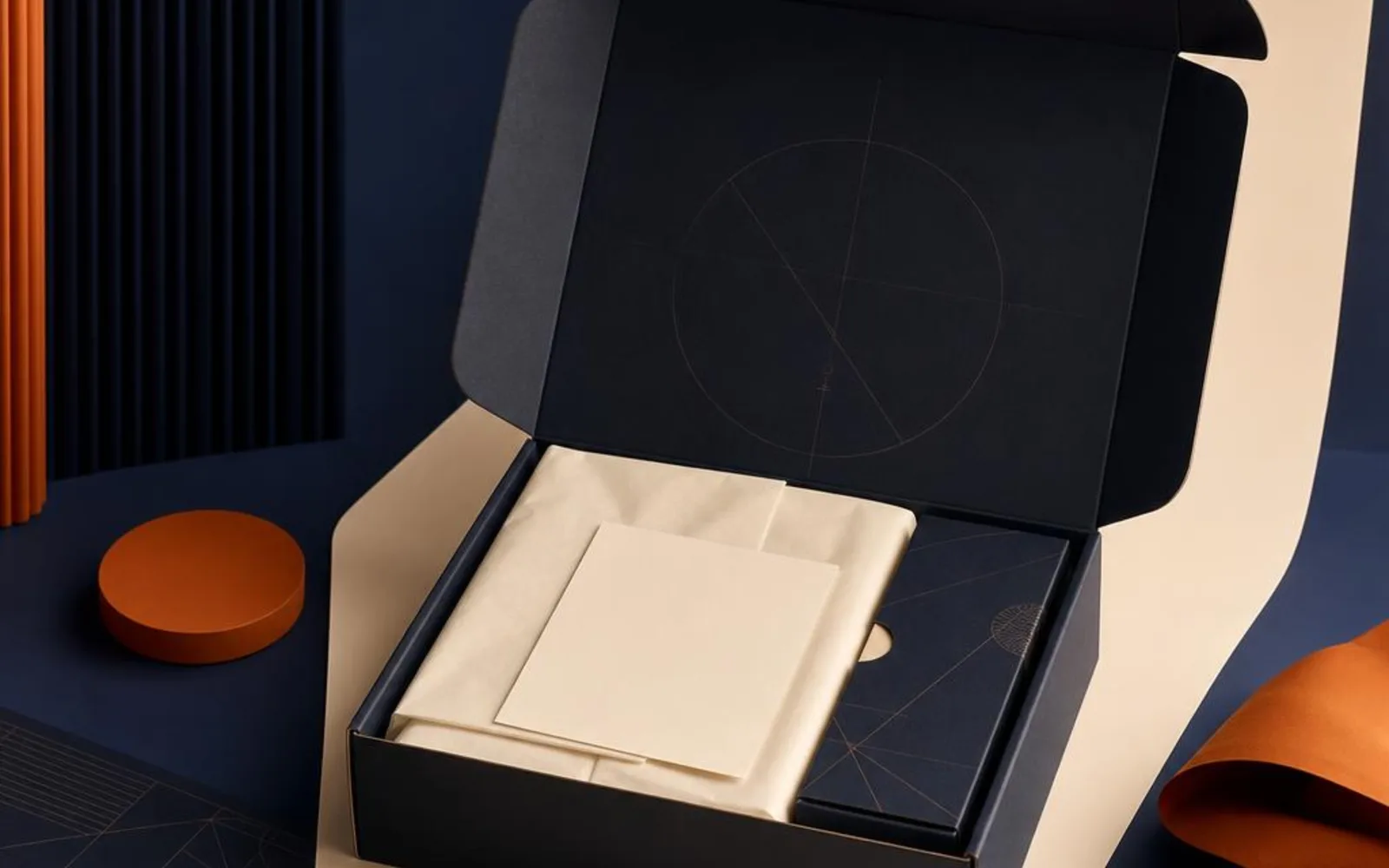
- The first sight. What greets them when the lid lifts. This is the moment to place something considered.
- The reveal. The product itself, presented rather than dumped.
Design each beat and the whole thing feels intentional. Skip the middle two and even a lovely product can arrive feeling careless. Mailer formats in the mailer boxes range are built for exactly this journey — sturdy enough to survive the courier, tidy enough to open well.
Inside-lid printing: the cheapest theatre
Here's a trick that costs little and does a lot. Print the inside of the lid.
The outside of a box gets knocked about in transit; the inside stays pristine until the customer opens it, which makes it the perfect stage for a message. A thank-you, a pattern, a line about who made the thing — whatever suits your brand. It's the beat between "opening" and "first sight", and most brands leave it blank.
Because it's a single printed surface, it's an inexpensive way to add a moment of surprise. Small effort, disproportionate reward.
Theatrical needn't mean wasteful
There's a worry that a good unboxing means mounds of tissue, filler and packaging destined straight for the bin. It doesn't have to.
Restraint reads as confidence. A box cut to fit the product needs less filler, protects better and looks more assured than one drowning in void fill. Materials that can be reused or that recycle easily — corrugated board is widely recycled — let you make a moment without making a mess. The best unboxing often feels generous precisely because nothing is wasted.
The quiet power of a box worth keeping
Some boxes go in the recycling the moment they're emptied. Others end up on a shelf holding oddments, or under a bed keeping keepsakes. That second kind is doing something valuable: it keeps your brand in the house, in plain sight, long after the sale.
A box worth keeping doesn't have to be elaborate. It has to be well-made, nicely finished and the right size for a second life. Sturdy formats from the gift boxes range tend to survive that promotion from packaging to keepsake.
Unboxing as quiet word-of-mouth
People photograph parcels they like. They show a friend, they post the reveal, they mention where it came from. You'll have seen it in your own feeds — a box opened, a product held up, the moment shared.
None of that can be forced, and you shouldn't try. But a box designed as a sequence, finished with care and worth a second look gives people a reason to do it. The packaging becomes the advert, carried by the customer rather than bought by you.
The box has to survive the journey first
All the sequence thinking in the world counts for nothing if the box arrives crushed. Before you design the theatre, get the structure right — a parcel takes knocks, gets stacked and rides in vans, and the finish means little if a corner's staved in on the doorstep.
That's where board choice earns its place. Corrugated construction gives a mailer the stiffness to shrug off handling, while a fitted interior stops the product sliding and taking damage in transit. A box that opens beautifully but protects poorly is a false economy; a box that protects well but opens like a chore leaves the moment flat. You want both, and they're not in conflict — they're two halves of the same brief.
Design the protection and the presentation together, from the start. Retrofitting one onto the other rarely works as cleanly.
Getting it right
Start by opening one of your own parcels as a stranger would. Note each beat — the doorstep, the opening, the first sight, the reveal — and ask where it falls flat. Usually it's the middle: a great product in a box that opens like a chore. Fix the sequence, keep it lean, and let the customer do the sharing.
If you'd like a second opinion on how your parcel opens, tell us about your product and the journey it takes and we'll help you design the moment.