
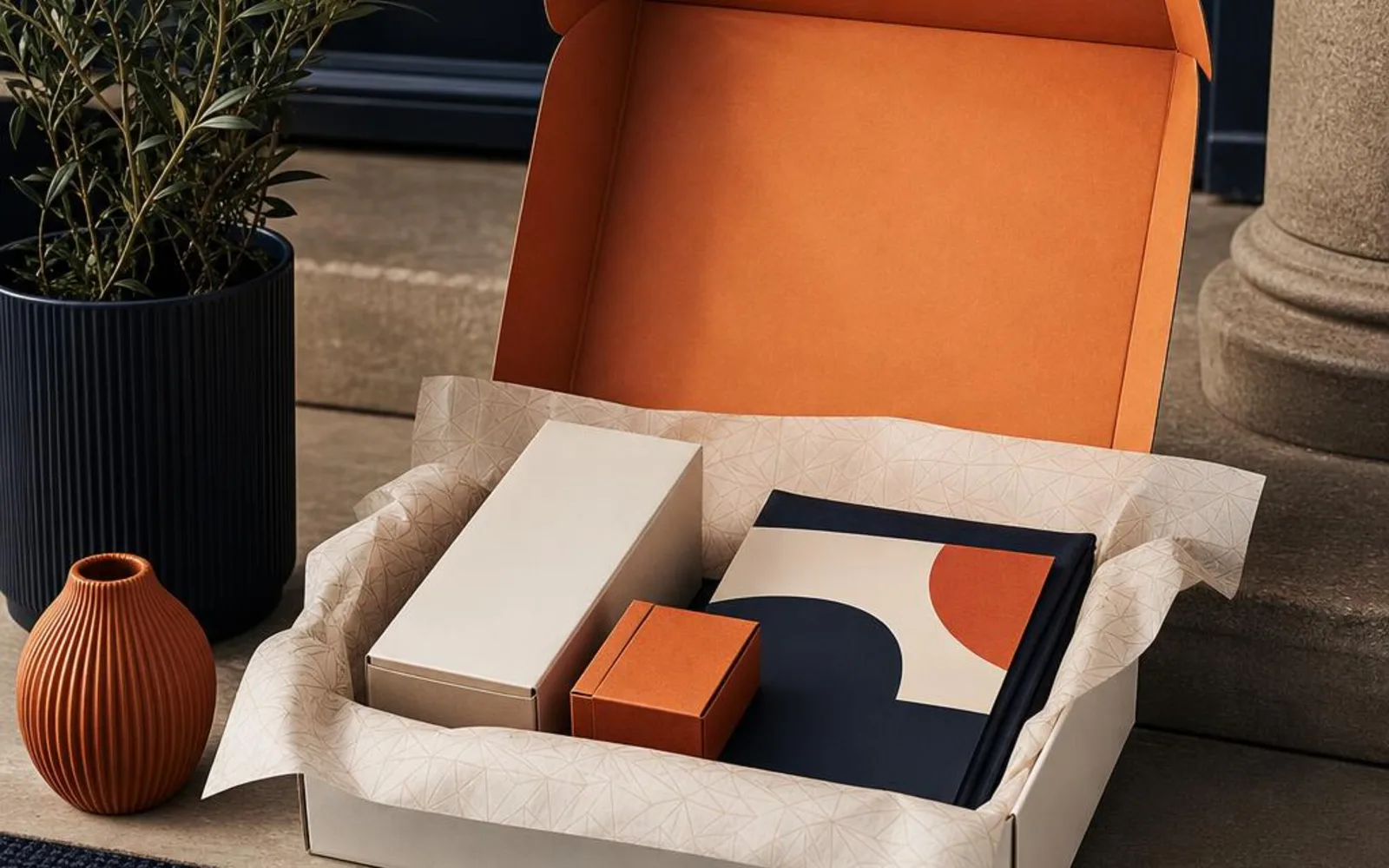
Most businesses sell a product once. A subscription business sells the same moment over and over, and the box is a big part of that moment. It arrives on the doormat months after the novelty has worn off and still has to feel worth it.
That is the odd challenge of subscription packaging. Your customer already knows roughly what is inside. The product isn’t the surprise — the ritual is. So the box has to carry the ritual month after month without becoming wallpaper.
The box is the experience
In a lot of subscription categories the actual contents are broadly similar to a rival’s. Coffee is coffee, treats are treats, socks are socks. What people are really paying for is the small, reliable pleasure of the box turning up and being opened.
So it is worth treating the box as the product, not the wrapper. The weight of the lid, the way it opens, the first thing the eye lands on — that is the thing people renew for, even if they’d never say so out loud.
Designing for repetition, not for one big shout
A box seen once can afford to shout. A box seen every month cannot. What thrills on the first delivery starts to grate by the fourth.
Restraint ages better than noise. A calm, confident design that you are happy to receive twelve times is worth more than a loud one that feels tired by spring. Build the personality into small, well-made details rather than a big graphic that never changes.
- A quiet, consistent exterior that people come to recognise on the doormat.
- Room for small variety inside so each month still feels a little different.
- Details that reward a second look rather than demand attention on the first.
Letterbox or doorstep?
Before anything else, decide where the box is meant to land. A parcel left on the doorstep and a slim box posted through the letterbox are two different design problems.
Letterbox thinking means keeping depth down and making the whole thing survive being pushed through a slot without help. Doorstep thinking gives you more room for a proper reveal, but the box also has to look composed sitting outside a front door. Knowing which one you are designing for shapes the shape itself. Our mailer boxes cover both ends of that scale.
The reveal sequence and the inside lid
Opening a box is a small sequence of events, and you get to direct it. What people see first, second and last is a choice, not an accident.
The inside of the lid is prime space that is easy to forget. It is the first thing someone reads once the box is open, and a short, warm message there — a hello, a note on what’s inside, a reason to look forward to next month — does a lot of quiet work. Think of the reveal as a little story with a beginning, a middle and a satisfying end.
Seasonal change without a full redesign
You want each month to feel fresh, but redesigning the whole box every time is expensive and slow. The trick is to keep the core box steady and change the cheap, changeable bits.
- Printed sleeves that slide over a consistent base box.
- Inserts and tissue in seasonal colours.
- A different inside-lid message or card each month.
This gives subscribers the variety they enjoy while keeping your production simple and your identity constant. The box stays recognisable; the mood shifts with the season.
Board and durability for repeat journeys
A subscription box makes the same trip every month, and it has to survive the post or the courier network every time. A box that arrives fine in June and crushed in December undoes a lot of goodwill.
Board weight, measured in gsm, is part of this, but so is the style of box. A mailer with tuck-in flaps that lock shut travels better than something that needs tape to stay closed, and it opens more cleanly at the other end. Pick a construction that holds up without asking your customer to fight it, and one you can pack quickly month after month without a struggle.
Churn happens at the doormat
People decide whether a subscription is still worth it far earlier than you’d think. The verdict often lands before the lid is fully open — in the weight of the parcel, the state it arrived in, the first glimpse of what’s inside.
A box that turns up crushed, flimsy or dull chips away at the feeling that this is money well spent. A box that arrives intact and opens well buys you goodwill before the contents have even made their case. That doorstep moment is quietly doing your retention work for you.
Bringing it together
Subscription packaging is a long game. Design for the tenth delivery, not just the first: something calm enough to enjoy repeatedly, cheap enough to vary by season, and sturdy enough to arrive proud every time. Get the doorstep moment right and the renewals tend to follow.
If you are planning a recurring box and want it to hold up month after month, start a quote and tell us how it ships so we can build for the doormat.