
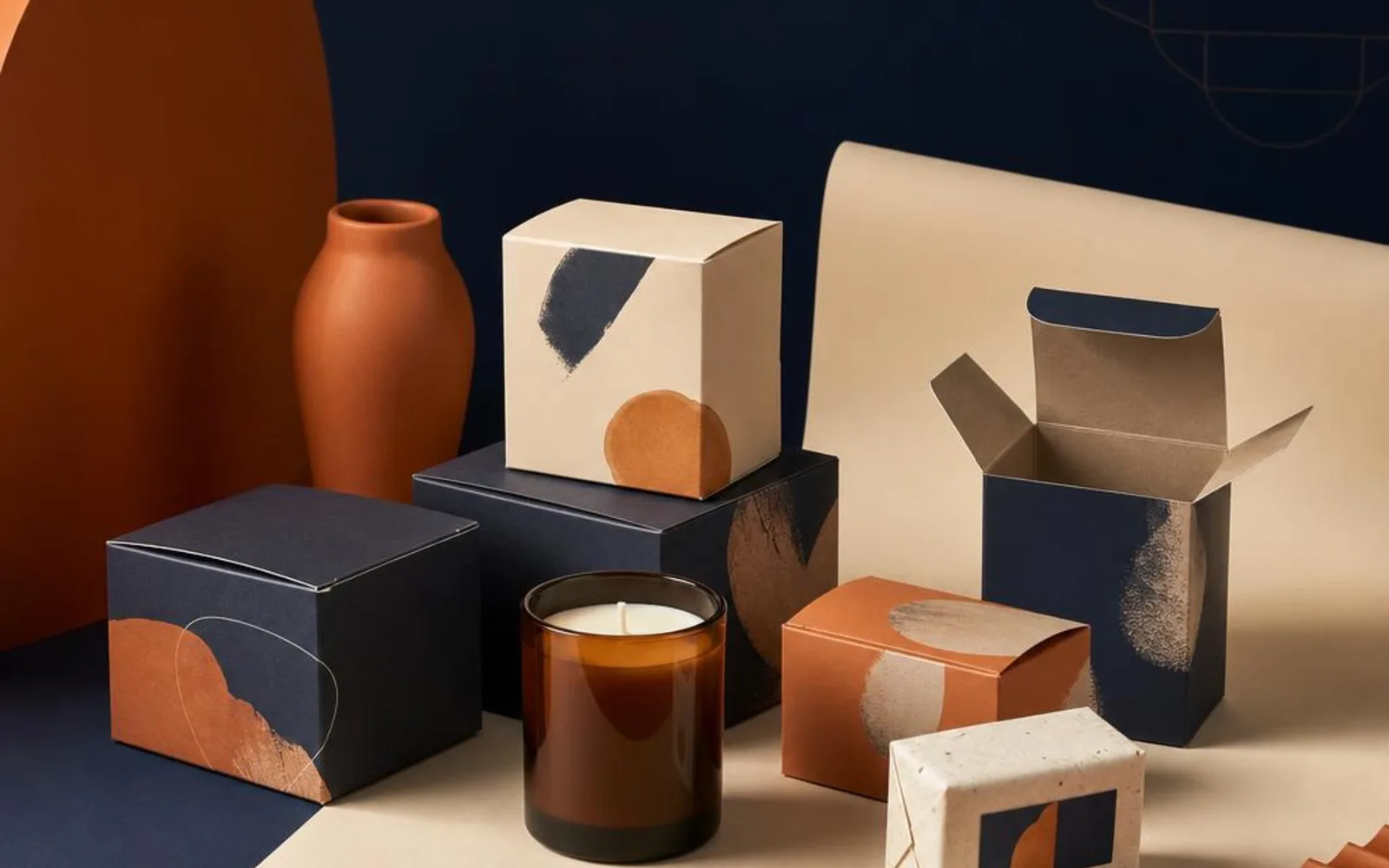
A bar of handmade soap or a hand-poured candle carries a lot of quiet effort. The packaging is the first thing a customer meets, and if it looks like an afterthought, it undercuts everything that went into the product.
The good news is that small products can hold their own. Done well, a modest box gives a maker real shelf presence without pretending to be something it is not.
Packaging that matches the care in the product
If you have spent hours getting a scent or a cure right, the box should reflect that. It does not need to be elaborate — it needs to look intentional.
Clean typography, a sensible colour palette and board that feels solid go a long way. Customers read effort into detail, and packaging is where they see it first.
It also helps the price make sense. A handmade product usually costs more than the mass-produced version beside it, and packaging that looks the part quietly justifies that gap before anyone has to explain it.
The market-stall test
Craft fairs are honest. Your products sit next to a dozen others, and buyers walk the aisle deciding in seconds what to pick up.
A consistent look across your range helps you read as a brand rather than a table of loose items. That coherence — same style, same logo placement, a shared palette — is often what makes a passer-by stop, and it is easy to lose when each product is packaged differently.
The same look pays off online, too. A tidy shelf of matching packaging photographs well, and those photos are doing your selling long after the fair has packed up for the day.
Soap: band, full box or window box
Soap gives you a few sensible routes, and the right one depends on what you want the customer to see and smell.
- Paper band — a simple wrap that leaves the bar largely exposed. Economical, lets the soap breathe, and shows off colour and texture.
- Full box — more protection and more printable surface, so there is room for your story and the details. It keeps the bar clean and gives a tidy, finished look.
- Window box — the middle ground, showing the product through a cut-out while still enclosing it.
Our soap boxes cover these formats, and it is worth trying more than one to see which suits how you sell.
Candles: the box works harder
Candles are heavier and often housed in glass, which changes the job of the packaging. It is no longer just presentation — it has to hold weight and guard against knocks.
That means paying attention to board strength and to how snugly the vessel sits. A candle that shifts inside its box feels cheap and risks a chipped rim before it reaches the customer. Plan the fit around the actual jar rather than a rough guess.
Candles are also a popular gift, which raises the bar again. If yours are likely to be given rather than kept, the box needs to look like something worth handing over, and a little weight and structure help it feel like a proper present.
Letting the product breathe — or not
Scent is part of what you are selling, so think about how much of it you want on display.
An open band or a window box lets a customer catch the fragrance and see the product, which suits a stall or a shelf where sampling drives the sale. A fully enclosed box keeps things cleaner and more protected, and leans on your branding and description to do the persuading. Neither is wrong — it depends on whether smell or protection matters more for how you sell.
Your sales channel often decides it for you. In person, letting people smell the product does a lot of the selling, while online the box has to carry the fragrance in words and pictures because nobody can lift the lid, so a printed panel describing the scent earns its place.
Small-batch realities
Most soap and candle makers are not producing at scale, and packaging should fit that reality rather than fight it.
Short runs let you test a design before you commit, which is sensible when you are still finding your look. If you run several scents or lines, you might vary a colour or a label detail per variant while keeping the overall style consistent — distinct enough to tell apart, coherent enough to read as one brand.
Testing per scent or line also tells you what actually sells. It is far easier to adjust a design while your order is modest than to be stuck with a large run of something you have since moved on from, and a maker who is still refining their range benefits from that flexibility.
Food-safe options are available if you are wrapping anything edible alongside your soaps or candles — just tell us what you are packing when you enquire, and we will point you to the right materials.
Small products can absolutely command attention; they just need packaging that takes them seriously. Match the format to how you sell, protect what needs protecting, and keep the look consistent across your range. When you know what you are packing, tell us the details and we will help you work out the right format.