
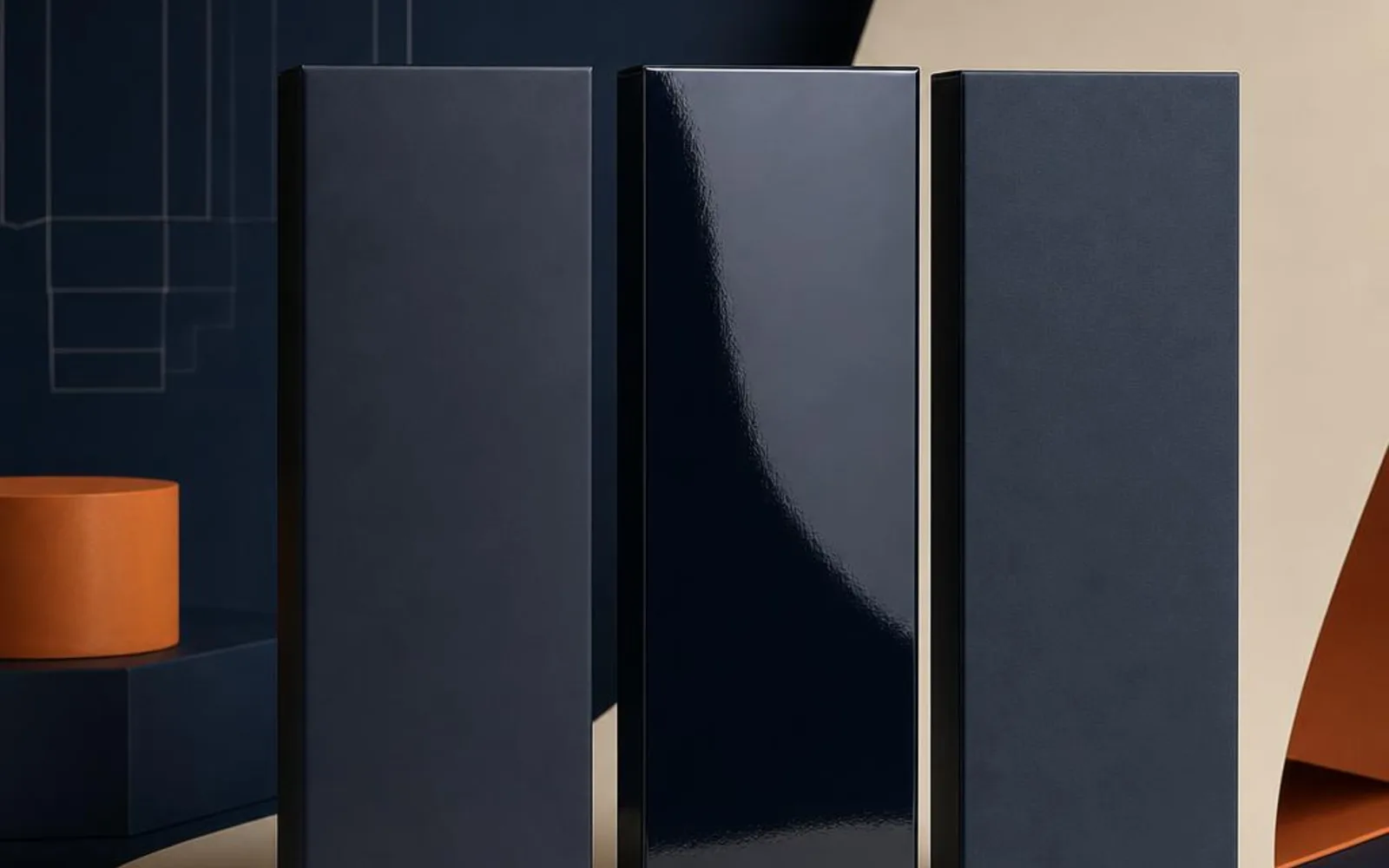
A box gets handled far more than a flyer. It is picked up, turned over, opened, closed and often kept — which is why the finish on the surface matters more than people expect.
Lamination is the usual answer. It is a thin protective film applied over the printed board, and the type you choose changes both how the box survives and how it feels in the hand. Matt, gloss and soft-touch each behave differently, so it is worth knowing what you are choosing between.
What lamination actually is
Strip away the jargon and lamination is a clear film bonded to the printed surface. It guards the print against scuffs, moisture and the general wear of being carried around, and it sets the look and texture of the finish.
Board without any finish can mark easily and pick up fingerprints. A laminate gives the box a bit of armour, which is exactly what something that will be handled repeatedly tends to need.
It is easy to treat the finish as a detail to settle at the end, but it is one of the first things a customer notices. The film you choose is felt before it is thought about, so it deserves a decision rather than a default.
Gloss: colour that pops
Gloss lamination is the shiny one. It makes colours look richer and deeper, which is useful when your design leans on bold artwork or bright photography.
It also wipes clean, so it copes well with products that might get touched by less-than-clean hands. The trade-off is fingerprints — on dark colours especially, a gloss finish shows every smudge, and that can work against you on a premium item.
Gloss tends to read as lively and accessible rather than quiet and expensive. That is a strength for a fun, colourful product and a weakness for one trying to feel restrained, so it pays to match the finish to the mood you are after.
Matt: calm and considered
Matt lamination does the opposite. It knocks back the shine for a flat, understated surface that reads as calm and often more expensive.
It photographs beautifully because there is no glare fighting the camera, which matters if your product ends up in unboxing videos or on social feeds. The one thing to watch is scuffing — under heavy handling, a plain matt finish can show marks, so it suits products that are treated gently or protected in transit.
Soft-touch: the velvet effect
Soft-touch is the finish people notice with their hands before their eyes. It has a faint velvety texture that makes a box feel warm and cushioned rather than slick.
It comes into its own where tactility is part of the sell — beauty, gifting and anything bought as a treat. If you make cosmetic boxes or premium sets, soft-touch is often the finish that makes someone slow down and pay attention.
It pairs well with other finishes, too. A soft-touch base with a small area of spot gloss or foil gives a satisfying contrast between matte and shine, which is a subtle way to draw the eye to a logo without shouting.
Finish changes perceived price before a word is read
Here is the part that surprises people: the finish signals value before anyone reads your copy or clocks your logo. A soft-touch or matt box tends to feel considered; a high-gloss box feels punchy and immediate.
Neither is better in the abstract. The right choice is the one that matches what your product is meant to feel like, and it does a lot of quiet persuading on the shelf.
This is why it is worth handling samples rather than deciding on screen. The difference between matt and soft-touch barely shows in a photo, yet it is obvious the moment you pick each one up, and that hands-on impression is exactly what your customer will get.
Choosing by product and handling journey
The simplest way to decide is to think about what the box is for and what it goes through on its way to the customer.
- Bold, colourful branding that needs to shout — gloss holds up well and keeps colours vivid.
- Understated, premium products — matt reads as calm and photographs cleanly.
- Anything sold on feel and treat-value — soft-touch rewards the hand as well as the eye.
- Boxes that take a rough ride — gloss shrugs off marks; if you want matt or soft-touch here, plan for a little extra protection.
For sturdier formats such as rigid boxes, the finish is doing double duty — protecting a box people are likely to keep and setting the tone for a product that has earned a bit of ceremony.
It is also fine to use different finishes across a range if it earns its keep. You might give an everyday line a hard-wearing gloss and reserve soft-touch for a premium tier, provided the overall look still reads as one brand rather than a jumble.
Lamination is a small decision with an outsized effect. Match the finish to how your product feels and how the box will be handled, and it will look right long after it leaves the shelf. If you are unsure which suits your range, get in touch and describe the product — we will talk it through.