
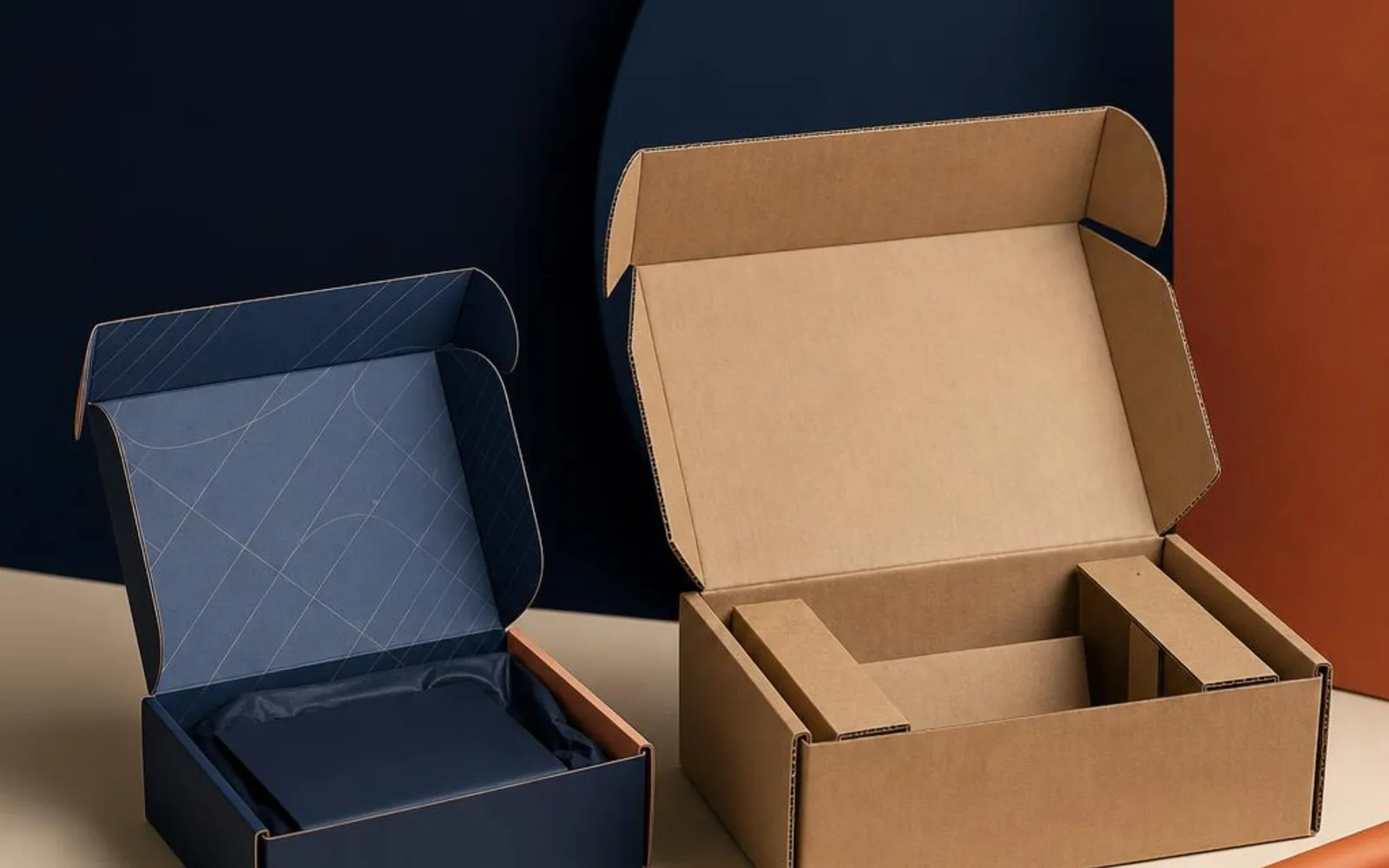
Two boxes turn up looking roughly the same on a warehouse shelf. One of them arrives at a customer’s door and feels like a small event. The other keeps a heavy order intact through a rough courier network and asks for no attention at all.
Both jobs matter. The trick is knowing which box is built for which, so you aren’t paying for presentation your product never shows off, or skimping on protection it badly needs.
What a mailer box actually is
A mailer is a self-locking corrugated box. It ships flat, then folds up with tuck-in wings and a front flap that clicks shut — no tape gun required. The corrugated fluting gives it a bit of cushioning while keeping the walls thin and neat.
Because it opens cleanly and closes without a mess of tape, a mailer is the box a customer unboxes rather than simply opens. That makes it the natural home for subscription products, beauty orders, small electronics and anything with a bit of a reveal to it. You’ll find the range on our mailer boxes page.
What a shipping box actually is
A shipping box is usually a regular slotted carton — the familiar RSC style, where four flaps meet in the middle top and bottom and get taped shut. It’s built around one priority: getting weight and volume from A to B without collapsing.
Shipping cartons stack well, take a beating, and carry the kind of loads a mailer would sag under. They aren’t trying to charm anyone. If your order is heavy, bulky, or made up of several items thrown in together, this is your workhorse. Our cardboard boxes cover the plainer carton end of things.
The doorstep-versus-warehouse distinction
Here’s the quiet difference that decides most of these calls. Ask where the box is really pointed.
- Doorstep boxes are seen by the customer. They’re part of the order. Printing on them earns its keep.
- Warehouse boxes move stock between you, a fulfilment partner or a shop. Nobody unwraps them for pleasure. Plain and sturdy is the sensible spend.
A mailer leans doorstep. A shipping carton leans warehouse. Once you frame it that way, the fog usually clears.
It also settles the argument about branding. A doorstep box is standing in for the shop your customer never walked into, so it’s worth dressing accordingly. A warehouse box only needs to say what’s inside clearly enough for someone to grab the right one in a hurry. Spending on the wrong one of those is the most common way brands quietly waste money on packaging.
When presentation wins, and when pennies do
If your product is the sort people photograph, gift, or feel a little pleased to receive, presentation is doing real work. A mailer with a considered finish sets the tone before anything comes out of it.
If the goal is to move a lot of something safely at the lowest sensible cost per box, protection-per-penny wins. A well-sized shipping carton with honest board weight does that without fuss. Board is measured in gsm, and a heavier board simply gives you more to hold onto — there’s no need to overbuy beyond what the load asks for.
The inside of the lid is prime space
One thing mailers offer that plain cartons rarely bother with: the inside surface. When the flap lifts, the underside of the lid is the first thing a customer sees.
A printed message there, a pattern, or a simple thank-you costs little and lands well, because it arrives at the exact moment attention is highest. It’s the closest packaging gets to a handshake.
Size to the product, not to the courier
A common slip is sizing a box to fit a courier bag or a shelf, then padding out the gap with filler. That wastes board, invites movement, and makes a small order look apologetic.
Measure the product first, add a little clearance for any protective wrap, and build the box around that. A snug box uses less material, rattles less, and simply looks like it was meant for what’s inside — because it was.
This matters more for mailers than for plain shippers. A doorstep box that’s clearly too big for its contents reads as careless, however good the print is, and no amount of filler quite hides the void. A shipping carton has a little more licence to be roomy, since it’s often carrying mixed items, but even there a box sized to the load stacks better and travels more steadily. Either way, the courier’s bag is the wrong thing to design around.
When you actually need both
Plenty of brands aren’t choosing one box; they’re nesting two. A retail-ready mailer or carton holds the product and the branding, and a plain shipping box carries several of those units to a shop or a fulfilment centre.
That double layer keeps the presentation box pristine while the outer takes the knocks of transit. If you sell wholesale as well as direct, this is often the neatest answer — the pretty box never has to survive the loading dock alone.
It’s also how a lot of gifting works. The customer wants the inner box to arrive looking like something worth giving, and a plain outer means it does, no matter how the parcel was handled on the way. The outer becomes disposable and honest; the inner becomes the keepsake. You’re not overspending on either, because each is doing only what it’s good at.
A short way to decide
Picture the moment the box is opened. If a customer is doing the opening, lean mailer and spend on the inside. If a stockroom is doing it, lean shipping carton and spend on strength. If both happen, use both, and let each do the one job it’s good at.
Not sure which way your product falls, or want a hand sizing it properly? Send us the details and we’ll talk it through.