
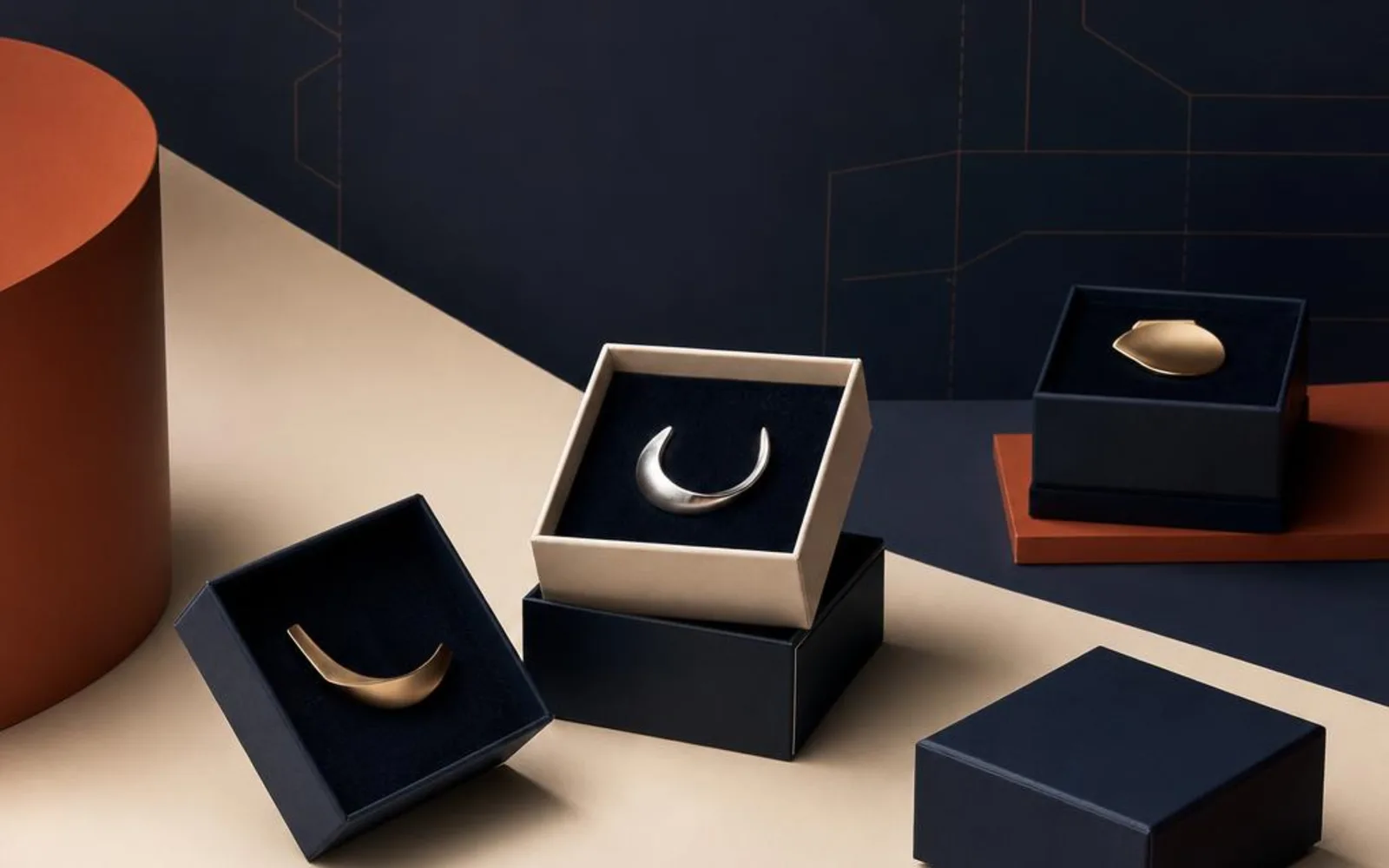
Jewellery is the smallest thing many people ever buy, and one of the most loaded. A ring weighs almost nothing and can carry a proposal. A necklace fits in a palm and marks a birthday, an anniversary, a first real gift to someone who matters.
Which means the box is not an afterthought. For jewellery, the box is the presentation — often the first thing the recipient sees, and the frame the piece is judged in.
Tiny product, enormous moment
Most products are opened casually. Jewellery tends to be opened in front of someone, at a moment that's been built up to. The box is on stage in a way a shampoo bottle never is.
That's the opportunity. Get the box right and it lifts the piece; get it wrong and even a beautiful item lands flat. The stakes are unusually high for something so small, and worth designing around.
Proportion is everything
The most common mistake with small items is the wrong-sized box. Too big and the piece rattles around, looking lost and cheap. Too small — or worse, a padded envelope — and it vanishes, arriving like an incidental rather than the main event.
A jewellery box should fit the piece closely, holding it still and central. The item should sit where the eye lands the instant the lid lifts. Proportion does quiet, powerful work: a piece framed snugly looks considered and valuable, while the same piece adrift in a big box looks like a bargain.
Inserts and nests that hold a piece still
This is where jewellery packaging earns its reputation. The insert — the platform, foam or card structure that cradles the piece — is what turns a box into a presentation.
- Foam pads grip rings and studs so they stay put and stay upright.
- Card platforms and slots hold a chain in a clean line rather than a tangle.
- Nests and recesses give each piece its own place, so a set looks arranged rather than piled.
A good insert does two jobs at once: it keeps the piece from moving in transit, and it centres it as a display. Both matter. The substantial board and fitted interiors of the rigid boxes range suit inserts particularly well, because there's real structure to build the nest into.
The keepsake effect
Jewellery boxes get kept. Long after the wrapping's gone, the little box sits on a dresser or in a drawer, holding the piece between wearings. That's unusual — most packaging is emptied and binned within minutes.
So your name stays in the bedroom, seen every time the drawer opens. A box that's nice enough to keep is doing marketing for you for months, silently, at no extra cost. It's worth making one people won't want to throw away.
Remember who's really buying
Most jewellery is bought for someone else. The person paying isn't the person opening, which changes what the packaging has to do.
It has to be giftable straight out of the bag — ready to hand over without extra wrapping, ideally handsome enough that the buyer feels the presentation is sorted for them. A box that looks like a gift saves your customer a job and makes them look good in the moment that matters. Smaller pieces and pouches also pair neatly with the curved, giftable shapes in the pillow boxes range for lighter accessories and add-ons.
Match the box to the piece
There's a rule of thumb worth holding onto: the box should agree with the piece it holds. A delicate chain in a flimsy box looks like costume jewellery. That same chain in a solid, well-finished box reads as something to be taken seriously — the weight of the box changes the perceived weight of the piece.
That doesn't mean everything needs the heaviest board going. It means the box and the product should tell the same story. A playful, affordable range wants a lighter, brighter box; a fine piece wants substance under the fingers. Mismatch them and the customer senses it, even if they can't say why.
Finishes that suit small items
On something this small, a light touch of finish goes a long way. A foiled logo on a lid, a soft-touch surface that feels good in the hand, a debossed mark pressed into the board — any one of these lifts a jewellery box without tipping it into fuss. The scale is in your favour: a small area of finish costs less to apply and still reads as considered.
The same restraint that serves finishes generally is doubly true here. One quiet detail on a clean box suits jewellery far better than a box competing with the piece for attention. The product should always win that contest.
Colour choice helps too. Deep, plain tones — a rich navy, a warm charcoal, a soft neutral — tend to flatter jewellery more than busy patterns, because they read as a backdrop rather than a rival. Let the metal or stone be the bright thing in the box.
Presenting with care
For jewellery, packaging isn't the wrapper around the sale — it's part of the product. Get the proportion tight, the insert right and the weight of the box in step with the piece, and you turn a small item into a moment the recipient remembers and the box they keep.
If you make or sell jewellery and want packaging that does the piece justice, browse the jewellery boxes range or get in touch and we'll help you match box, insert and finish to what you're presenting.